
Roofing Quotes Explained for Homeowners delves into the intricate world of roofing quotes, shedding light on the importance of understanding and comparing multiple quotes before embarking on any roofing project. This guide aims to equip homeowners with the knowledge and insights necessary to navigate the complexities of roofing estimates confidently.
Importance of Roofing Quotes
When considering a roofing project for your home, it is crucial to gather multiple quotes from different roofing contractors. This practice not only helps you make an informed decision but also ensures that you get the best value for your money.
Why Homeowners Should Seek Multiple Quotes
Obtaining multiple roofing quotes allows homeowners to compare prices, services, and materials offered by different contractors. This helps in understanding the market rate for the project and prevents overcharging by unscrupulous companies.
- By collecting multiple quotes, homeowners can evaluate the professionalism and expertise of each contractor, ensuring they hire a reputable and reliable company for the job.
- Comparing quotes also gives homeowners the opportunity to negotiate prices and request modifications to the project scope, ensuring their needs and budget are met.
- Having multiple quotes provides homeowners with a sense of security, knowing they have explored all available options and selected the best contractor for their roofing project.
Components of a Roofing Quote
When receiving a roofing quote, homeowners can expect to see several key components that provide important details about the cost and scope of the project.
Materials
The materials section of a roofing quote lists the specific products that will be used for the project. This includes the type of shingles, underlayment, flashing, and any other materials needed for the job. Understanding the materials specified in the quote is crucial as it directly affects the quality and longevity of the roof.
Labor Costs
Labor costs Artikel the expenses associated with the installation or repair work to be done by the roofing contractor. This includes the cost of labor per hour or per project, as well as any additional fees for specialized services. Knowing the labor costs helps homeowners evaluate the value of the services provided.
Timeline
The timeline section of a roofing quote indicates the estimated duration of the project from start to finish. This includes details on when the work will begin, how long it is expected to take, and any potential delays that may arise.
Having a clear timeline helps homeowners plan accordingly and understand the project's overall timeframe.
Warranty Information
Warranty information in a roofing quote specifies the type and duration of warranty coverage provided by the contractor or manufacturer. This is important as it ensures that homeowners are aware of their rights and protections in case issues arise after the project is completed.
Understanding the warranty terms can provide peace of mind and assurance of quality workmanship.
Payment Terms
The payment terms section Artikels the total cost of the project, including any deposits, progress payments, or final payments required. It also details the accepted payment methods and the schedule for making payments throughout the project. Knowing the payment terms helps homeowners budget effectively and avoid any financial surprises during the roofing process.
Factors Influencing Roofing Quotes
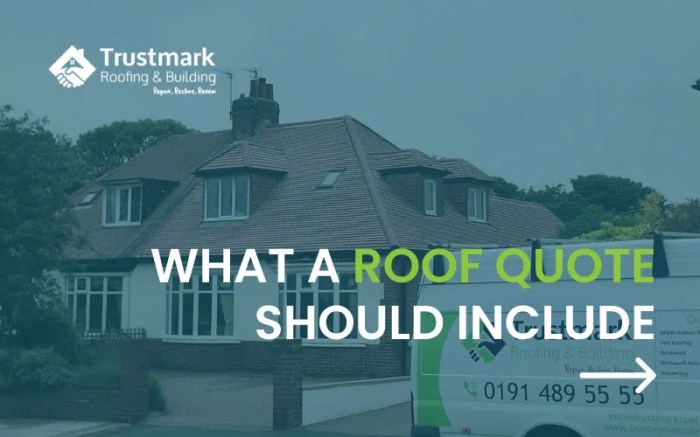
When it comes to receiving roofing quotes, there are several key factors that influence the pricing provided by contractors. Understanding these factors can help homeowners make informed decisions when planning for roof repairs or replacements.One of the primary factors that impact roofing quotes is the size of the roof.
Larger roofs require more materials and labor, therefore resulting in a higher overall cost. Additionally, the pitch and slope of the roof can also affect pricing, as steeper roofs may require special safety equipment and more time to complete the job.The quality of materials used is another crucial factor in determining the final quote.
Higher quality materials, such as premium shingles or metal roofing, will come at a higher price point compared to basic asphalt shingles. Homeowners should consider the longevity and durability of the materials when deciding on the best option for their roof.Labor costs play a significant role in the overall pricing of roofing quotes.
Factors such as the complexity of the job, accessibility of the roof, and the experience of the roofing crew can all impact labor costs. Additionally, location can also influence labor rates, as prices may vary depending on the region's cost of living and demand for roofing services.
Roofing Material Options
- Asphalt Shingles: Affordable and widely used, but may need more frequent replacements.
- Metal Roofing: Durable and long-lasting, but comes at a higher initial cost.
- Tile Roofing: Stylish and durable, but can be expensive to install and repair.
- Slate Roofing: High-end option with a long lifespan, but requires specialized installation.
Types of Roofing Estimates
When it comes to getting roofing quotes, homeowners may encounter different types of estimates. Understanding the nuances between binding and non-binding estimates can help you make informed decisions about your roofing project.
Binding Estimates
A binding estimate is a fixed price given by the roofing contractor that cannot be changed unless you request additional work or run into unforeseen issues. This type of estimate provides homeowners with a clear idea of the total cost of the project upfront.
- Advantages of Binding Estimates:
Provides price certainty and protects homeowners from unexpected cost increases.
- Disadvantages of Binding Estimates:
If the scope of work changes or unforeseen issues arise, homeowners may need to renegotiate the contract, potentially leading to delays and additional costs.
Non-Binding Estimates
Non-binding estimates, on the other hand, are rough estimates provided by roofing contractors based on the information available at the time. The final cost of the project may vary from the initial estimate.
- Advantages of Non-Binding Estimates:
Allows for flexibility in adjusting the scope of work and pricing as the project progresses.
- Disadvantages of Non-Binding Estimates:
Homeowners may end up paying more than initially anticipated if the final cost exceeds the estimate.
Negotiating Roofing Quotes
When it comes to negotiating roofing quotes, homeowners can employ certain strategies to potentially lower costs while still ensuring quality work. Here are some tips to help you navigate the negotiation process:
Understanding the Quote
Before starting negotiations, make sure you fully understand the details of the roofing quote. This includes the scope of work, materials to be used, labor costs, and any additional fees. Knowing these specifics will empower you to negotiate effectively.
- Compare Multiple Quotes: Obtain quotes from multiple roofing contractors to have a better understanding of the average cost for your project. This will give you leverage during negotiations.
- Ask for Clarifications: If there are any ambiguous or unclear items in the quote, don't hesitate to ask the contractor for clarification. This will help you make informed decisions.
Negotiation Strategies
Once you have a clear understanding of the quote, you can use the following strategies to negotiate the best deal:
- Seek Discounts: Inquire about any available discounts or promotions that the roofing contractor may offer. This could include discounts for new customers, seasonal promotions, or referral rewards.
- Offer to Bundle Services: If you are considering multiple projects, such as roof repairs and gutter installation, propose bundling these services together for a discounted rate.
- Discuss Payment Terms: Negotiate flexible payment terms that work for both you and the contractor. This could involve splitting payments into installments based on project milestones.
- Explore Cost-Saving Alternatives: Discuss with the contractor if there are more cost-effective materials or methods that can be used without compromising on quality. This could help lower overall costs.
Final Summary
In conclusion, Roofing Quotes Explained for Homeowners offers a comprehensive look at the nuances of roofing quotes, empowering readers to make informed decisions when it comes to their roofing projects. By understanding the components, factors, types, and negotiation strategies associated with roofing quotes, homeowners can embark on their roofing endeavors with clarity and confidence.
Questions Often Asked
Why should homeowners seek multiple quotes for roofing projects?
Seeking multiple quotes allows homeowners to compare prices, services, and quality offered by different contractors, ensuring they make an informed decision.
What information is typically included in a roofing quote?
A roofing quote usually includes details on materials, labor, project timeline, warranties, and any additional costs.
How do variables like roof size and material quality impact roofing quotes?
Roof size and material quality play a significant role in determining the overall cost of a roofing project. Larger roofs and high-quality materials generally lead to higher quotes.
What are the advantages and disadvantages of binding vs. non-binding estimates?
Binding estimates provide a fixed cost for the project, offering stability but less flexibility. Non-binding estimates can change based on project variations, providing more adaptability but potentially leading to cost fluctuations.
How can homeowners negotiate with roofing contractors based on the quotes received?
Homeowners can negotiate by discussing price, materials, timelines, and warranties with contractors. Building a good rapport and being clear about expectations can help in reaching a mutually beneficial agreement.