

Step into the world of durable outdoor spaces with Concrete Patio Contractors for Durable Outdoor Spaces. Discover the key elements that make concrete patios a top choice for homeowners looking to enhance their outdoor living areas.
Explore the various aspects of concrete patio design, hiring the right contractor, and understanding the installation process to create a seamless outdoor oasis.
Importance of Concrete Patios
Concrete patios have become a popular choice for creating durable outdoor spaces due to their numerous benefits and long-lasting qualities. Concrete Patios Key Benefits:
1. Versatility
Concrete can be customized in various colors, patterns, and finishes to suit any design preference, making it a versatile option for outdoor spaces.
2. Durability
Concrete is known for its strength and resilience, able to withstand heavy foot traffic, harsh weather conditions, and frequent use without deteriorating quickly.
3. Low Maintenance
Compared to other materials, concrete requires minimal maintenance, with simple cleaning and occasional sealing to keep it looking fresh and new.
4. Cost-Effective
Concrete is a cost-effective option for outdoor flooring, providing long-term value and durability without the need for frequent replacements or repairs.
5. Longevity
With proper installation and care, concrete patios can last for decades, offering a durable outdoor space that can be enjoyed for years to come.
Design Considerations
When it comes to designing a concrete patio, there are various options available to create a unique and functional outdoor space. From choosing the shape and size to incorporating decorative elements, customization plays a key role in achieving the desired look and feel.
Shape and Layout
- Consider the shape of your outdoor space and how the patio will fit into the existing layout.
- Rectangular or square patios are classic choices, while curved or free-form designs can add visual interest.
- Think about how the patio will be used and what areas are needed for seating, dining, or other activities.
Color and Texture
- Concrete patios can be colored in a variety of shades to complement the surrounding landscape or match the exterior of the house.
- Stamped concrete is a popular option for adding texture and patterns to the surface, mimicking the look of brick, stone, or tile.
- Exposed aggregate concrete can provide a more natural and textured appearance, perfect for a rustic or modern outdoor space.
Decorative Elements
- Consider adding decorative borders, insets, or medallions to enhance the design and create a focal point on the patio.
- Integrate outdoor lighting, planters, or water features to add ambiance and functionality to the space.
- Personalize the patio with custom designs or patterns that reflect your style and preferences.
Hiring the Right Contractor
When it comes to hiring the right concrete patio contractor, there are several important criteria to consider to ensure you get quality work done on your outdoor space.
Evaluating Contractor Portfolios and Reviews
Before making a decision, take the time to review the portfolios of potential contractors. Look for past projects similar to what you have in mind to gauge their expertise and style. Additionally, read reviews from previous clients to get a sense of their professionalism, communication, and overall satisfaction with the work.
Checking Licenses, Insurance, and Warranties
Prior to hiring a contractor, it is crucial to check if they have the necessary licenses and insurance. A licensed contractor ensures they have met the required standards and regulations, while insurance protects you in case of any accidents or damages during the project.
Furthermore, inquire about warranties for the work done to guarantee that you are covered in case of any issues post-installation.
Installation Process
Installing a concrete patio involves several important steps to ensure a durable and long-lasting outdoor space. Proper site preparation, pouring of concrete, and post-installation care are essential for a successful project.
Site Preparation
- Clearing the area: The first step is to clear the area where the patio will be installed, removing any vegetation, debris, or obstacles.
- Excavation: The site is then excavated to the required depth to accommodate the concrete slab, ensuring a stable foundation.
- Grading and compaction: The ground is graded to ensure proper drainage away from the house and compacted to prevent settling.
- Installation of base materials: A base layer of gravel or sand is added and compacted to further support the concrete slab.
Pouring and Finishing
- Formwork: Wooden forms are used to contain the concrete during pouring, shaping the patio according to the desired dimensions.
- Pouring concrete: The concrete mix is poured into the forms and leveled to create a smooth surface.
- Finishing: The surface is then finished with tools to create texture, patterns, or a smooth finish, depending on the design preferences.
- Curing: The concrete must cure properly to achieve maximum strength and durability, typically requiring several days of moisture retention and protection from extreme temperatures.
Maintenance Requirements
- Sealing: Applying a sealer to the concrete surface can help protect it from stains, water damage, and wear over time.
- Cleaning: Regular cleaning with mild soap and water can help maintain the appearance of the patio and prevent buildup of dirt or debris.
- Repairing cracks: Periodic inspection for cracks or damage is important, and any issues should be repaired promptly to prevent further deterioration.
Last Word
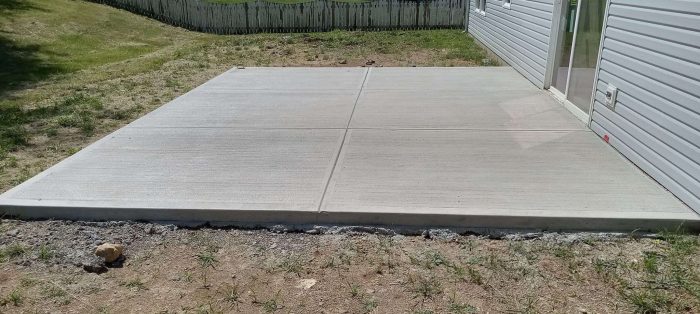
Elevate your outdoor space with the expertise of Concrete Patio Contractors for Durable Outdoor Spaces. From design considerations to installation processes, ensure a lasting and stylish outdoor area that you can enjoy for years to come.
Question & Answer Hub
Why are concrete patios a popular choice?
Concrete patios are popular due to their durability, longevity, and versatility in design options.
How do I find reputable concrete patio contractors?
Look for contractors with a solid portfolio, positive reviews, proper licenses, insurance, and warranties.
What is the importance of proper site preparation before pouring concrete?
Proper site preparation ensures a stable foundation and helps prevent issues like cracking or uneven surfaces.